Why Your Mindset Matters
Have you ever watched someone achieve something extraordinary and thought:
"They're just naturally talented."
Or perhaps you've said to yourself:
"I'm just not good at that."
These thoughts might seem harmless, but they reveal something much deeper—your mindset.
Your mindset affects every aspect of your life, including:
- Your confidence
- Your motivation
- Your relationships
- Your career
- Your health
- Your financial decisions
- Your resilience
- Your willingness to learn
The encouraging news is that your mindset isn't fixed. It's something you can develop, strengthen and improve throughout your life.
What Is a Fixed Mindset?
A fixed mindset is the belief that your intelligence, talents and abilities are largely permanent.
People with this mindset often believe they are either naturally good at something or they never will be.
Typical fixed mindset thoughts include:
- "I'm just not a confident person."
- "I'm terrible with money."
- "I'm not creative."
- "Some people are born successful."
- "If I fail, it means I'm not capable."
Because they fear failure, people with a fixed mindset often avoid challenges altogether.
Unfortunately, avoiding challenges also means avoiding growth.
What Is a Growth Mindset?
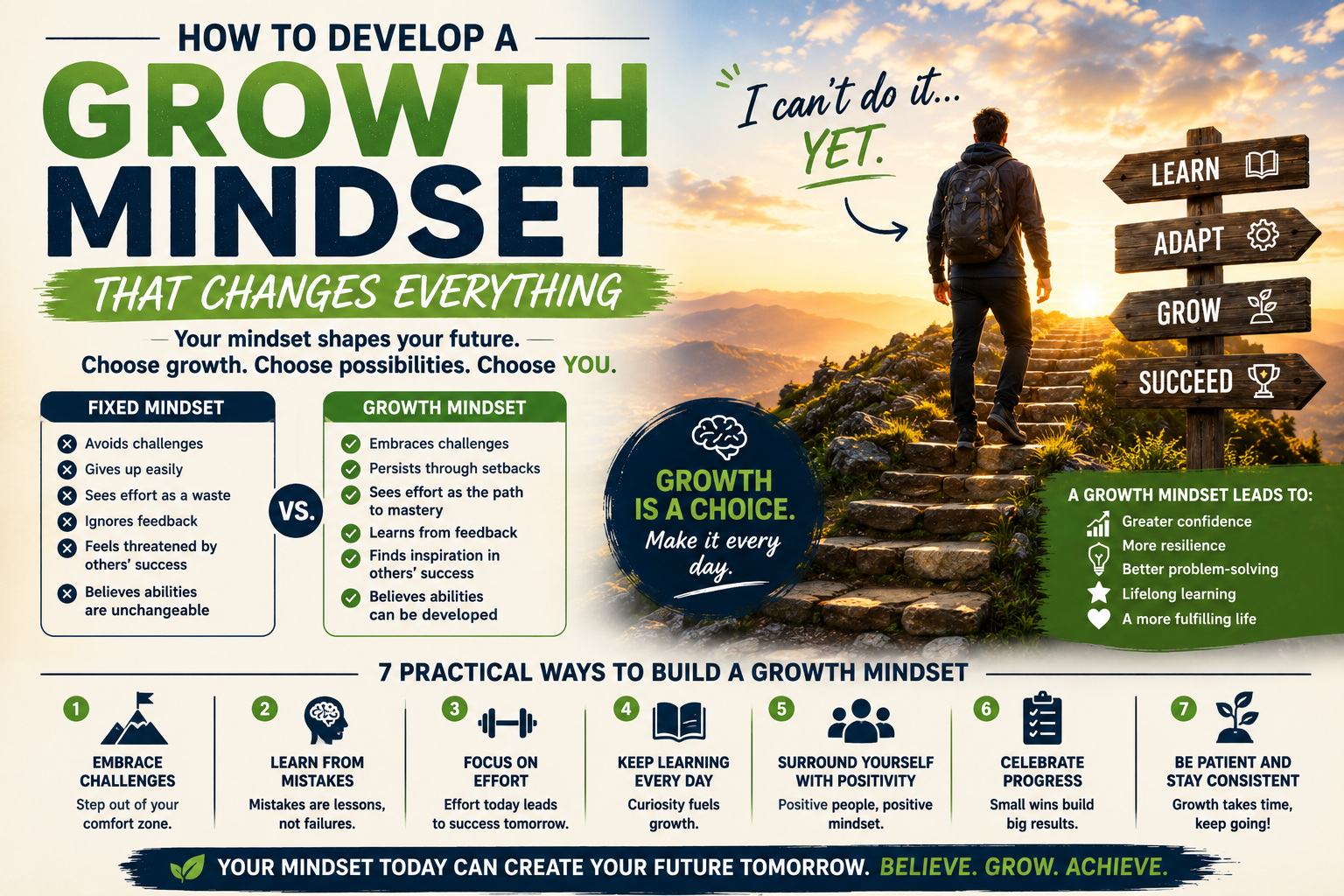
A growth mindset is the belief that skills, knowledge and abilities can be developed through consistent effort, learning and persistence.
Instead of seeing limitations, people with a growth mindset see opportunities.
They believe:
- Skills improve with practice.
- Intelligence develops through learning.
- Failure provides valuable feedback.
- Every challenge teaches something new.
- Success comes through consistent effort.
Rather than asking:
"Can I do this?"
They ask:
"How can I learn to do this?"
That simple change in perspective makes an enormous difference over time.
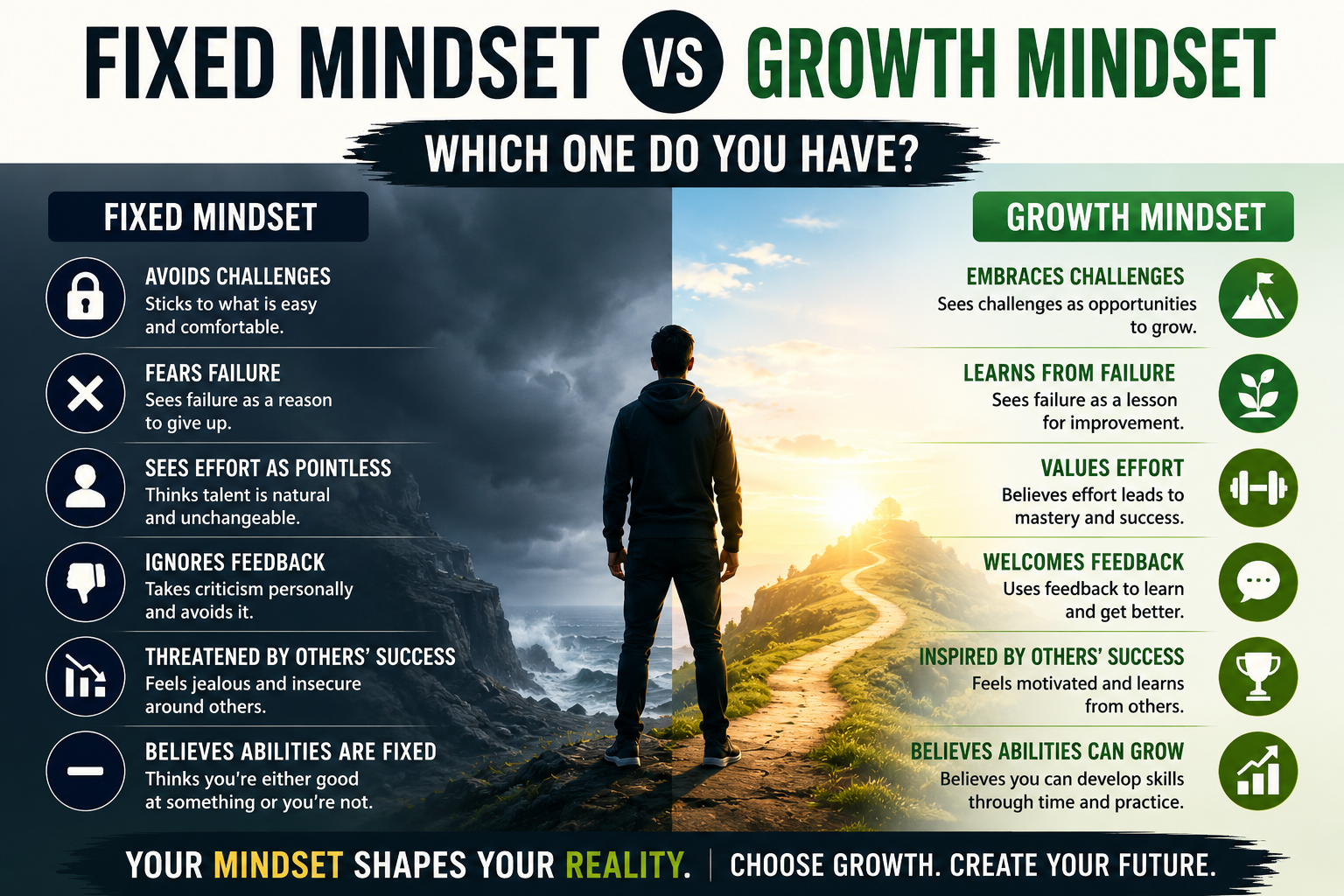
The Biggest Differences
Let's compare the two approaches.
| Fixed Mindset | Growth Mindset |
|---|---|
| Avoids difficult challenges | Welcomes new challenges |
| Sees failure as proof of inability | Sees failure as an opportunity to learn |
| Gives up when things become difficult | Keeps trying and adapts |
| Wants to look capable | Wants to become capable |
| Avoids feedback | Uses feedback to improve |
| Believes talent creates success | Believes effort creates success |
| Compares themselves with others | Competes with their previous self |
These differences may seem subtle, but over months and years they create dramatically different outcomes.
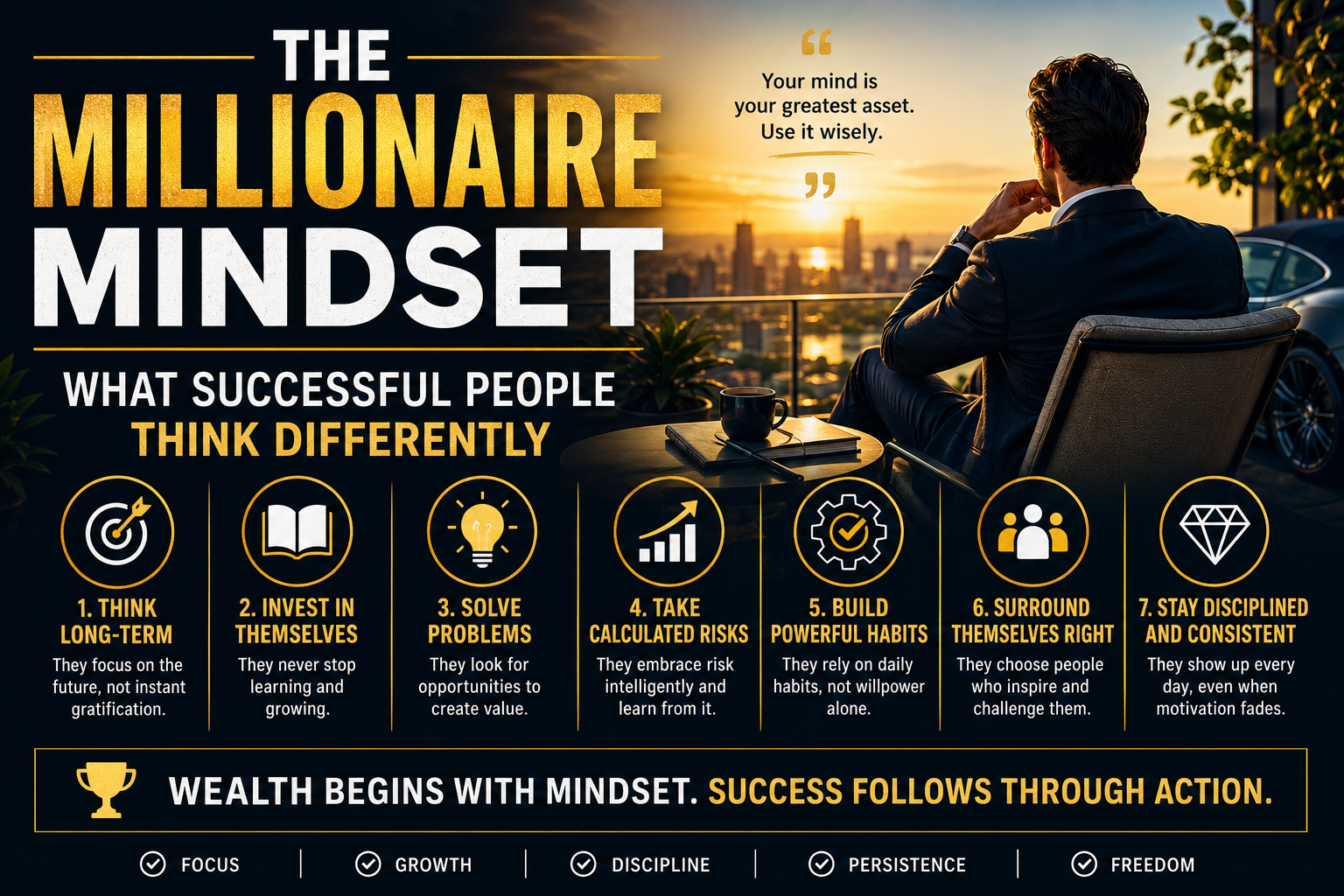
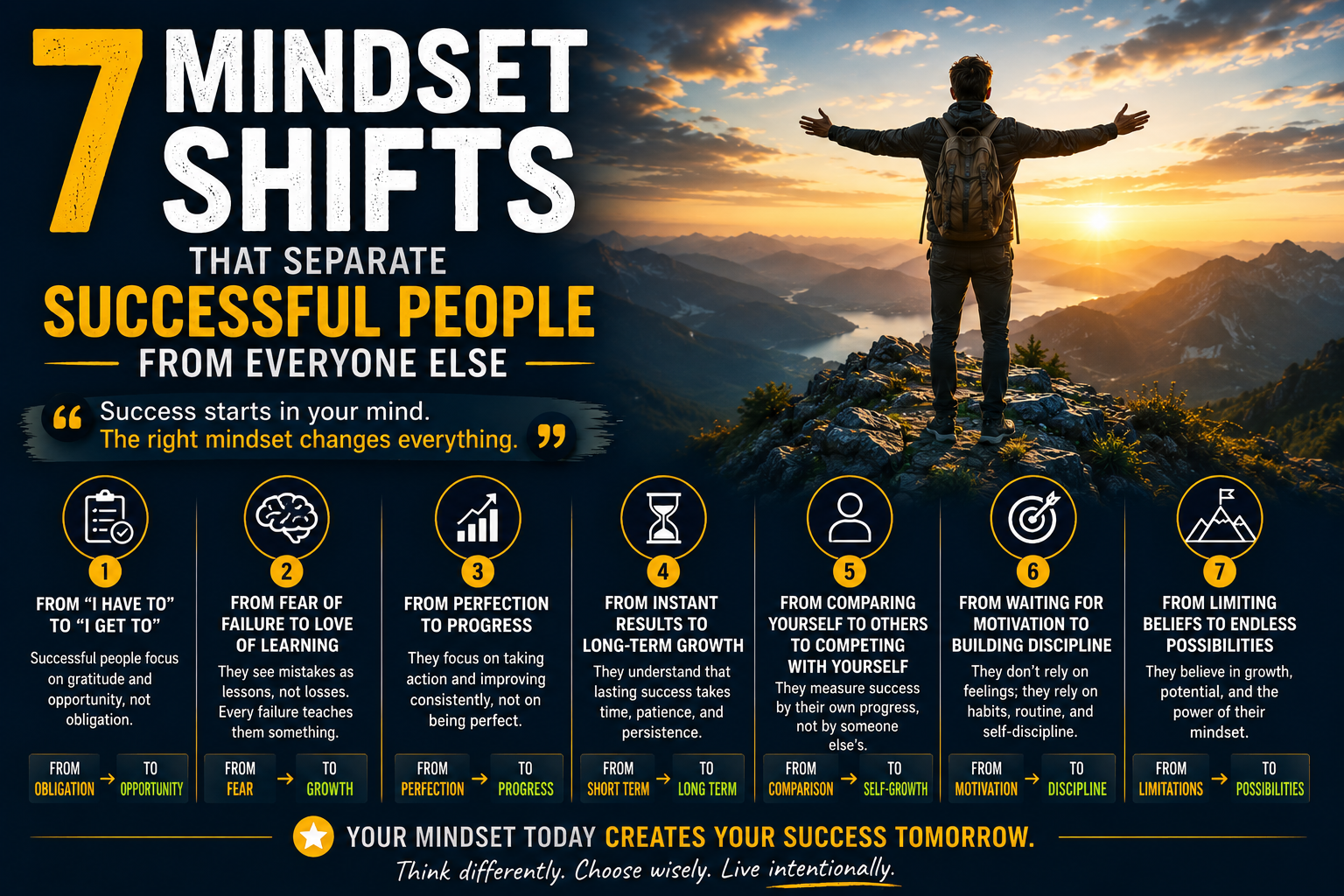
Why Successful People Almost Always Have a Growth Mindset
Highly successful people don't believe they're perfect.
They believe they're improving.
Whether you're looking at athletes, entrepreneurs, artists or business leaders, you'll notice similar behaviours.
They:
- Read regularly.
- Learn from mistakes.
- Ask questions.
- Seek coaching.
- Practise consistently.
- Adapt when plans change.
- Stay curious.
They understand that success isn't about avoiding mistakes.
It's about continuing to improve.
Signs You May Have a Fixed Mindset
You might recognise some of these habits:
- You avoid trying new things because you're worried about failing.
- You often compare yourself to others.
- You believe talented people don't need to work hard.
- You become discouraged by criticism.
- You quit when progress feels slow.
- You think success should come naturally.
Everyone experiences these thoughts occasionally.
The important thing is becoming aware of them.
Signs You Have a Growth Mindset
People with a growth mindset tend to:
- Enjoy learning.
- Ask for feedback.
- Stay patient during difficult periods.
- View mistakes as part of the learning process.
- Celebrate progress rather than perfection.
- Continue improving even after achieving success.
They understand that every expert was once a beginner.
Why Failure Isn't the Enemy
Many people fear failure.
Successful people expect it.
Failure doesn't define you.
It teaches you.
Every setback provides information.
Instead of saying:
"I failed."
Try saying:
"I've discovered one approach that didn't work."
That subtle change encourages persistence instead of giving up.
The Power of One Small Word: "Yet"
One of the simplest ways to begin developing a growth mindset is by adding one word to your vocabulary.
Yet.
Instead of saying:
"I can't do this."
Say:
"I can't do this yet."
That single word reminds your brain that improvement is possible.
Six Ways to Build a Growth Mindset
1. Embrace Challenges
Instead of avoiding difficult situations, see them as opportunities to grow.
Every challenge develops new skills.
2. Focus on Progress
Don't wait for perfection.
Small improvements every day eventually become remarkable results.
Ask yourself:
"What's one thing I can do today to move forward?"
3. Learn Something Every Day
Growth-minded people never stop learning.
Read books.
Listen to podcasts.
Take online courses.
Learn from people who inspire you.
Knowledge compounds over time.
4. Replace Negative Self-Talk
Pay attention to the stories you tell yourself.
Instead of:
"I'm hopeless at this."
Try:
"I'm still learning."
Your internal dialogue shapes your confidence.
5. Celebrate Effort
Don't only reward outcomes.
Celebrate the work.
Every workout completed.
Every healthy meal.
Every chapter read.
Every difficult conversation.
Effort creates momentum.
6. Reflect Regularly
Ask yourself each week:
- What did I learn?
- What challenged me?
- What improved?
- What will I do differently next week?
Reflection accelerates growth.
A Simple Growth Mindset Exercise
Take a piece of paper and draw two columns.
Label one:
Fixed Mindset
Label the other:
Growth Mindset
Now think about a challenge you're currently facing.
Write down your first instinctive thought.
Then rewrite it from a growth mindset perspective.
For example:
Fixed: "I'm terrible at public speaking."
Growth: "Public speaking is a skill I can improve with practice."
Repeat this exercise regularly and you'll gradually train your brain to respond differently.
Remember: Progress Beats Perfection
One of the biggest mistakes people make is believing they need to change overnight.
You don't.
Small improvements repeated consistently are incredibly powerful.
Reading ten pages.
Walking for twenty minutes.
Learning one new skill.
Saving a little money.
Practising gratitude.
Over time, these small actions reshape both your habits and your identity.
Final Thoughts
Your mindset isn't just the way you think.
It's the foundation of every decision you make.
A fixed mindset sees obstacles.
A growth mindset sees possibilities.
A fixed mindset fears failure.
A growth mindset embraces learning.
A fixed mindset asks:
"What if I can't?"
A growth mindset asks:
"What if I can?"
The mindset you choose today will influence the opportunities you create tomorrow.
Remember:
You don't have to become a different person overnight.
You simply need to become a slightly better version of yourself every day.
That's how lasting success is built.
Continue Building Your Growth Mindset
If you're ready to strengthen your mindset, develop better habits and become the best version of yourself, explore the motivational resources available at VibeLiftDaily.com.
From inspiring ebooks and personal development guides to daily motivation and practical wellbeing tools, you'll find everything you need to stay focused, build confidence and create lasting success.
The life you want begins with the mindset you choose today.